
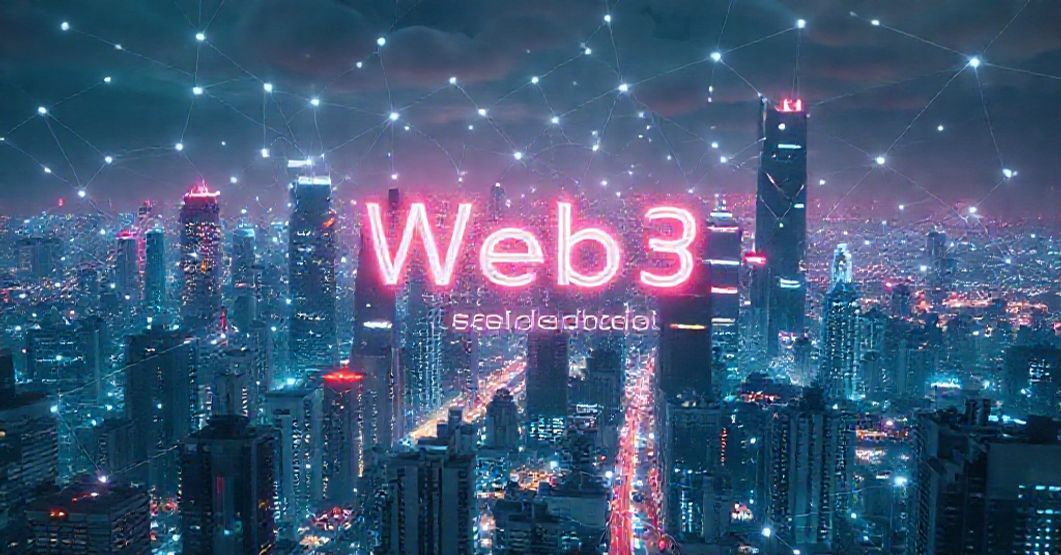
Unraveling the Mystery: What is Web3 and How Does it Work?
In recent years, you might have come across the term “Web3” being thrown around in tech circles. But what does it actually mean? Is it just another buzzword or something more substantial? In this blog post, we’ll explore the concept of Web3, its key principles, and how it’s different from the Web2 we know today.
What is Web3?
Web3 refers to the next evolution of the internet, which is designed to be more decentralized, open, and secure. It is built on blockchain technology and aims to give users greater control over their data and digital assets. The term “Web3” was coined by Gavin Wood, a co-founder of Ethereum, to describe this vision of the future internet.
Key Principles of Web3
- Decentralization: Web3 emphasizes decentralization, meaning data and applications are not controlled by a single entity or organization. Instead, they are distributed across a network of nodes.
- Blockchain Technology: Web3 is built on blockchain technology, which allows for secure, transparent, and tamper-proof transactions.
- User Control: Users have more control over their data and digital assets, with the ability to manage their own identities and permissions.
- Interoperability: Web3 applications are designed to be interoperable, meaning they can interact and communicate with each other seamlessly.
How Does Web3 Work?
Web3 is built on blockchain technology, which is essentially a digital ledger of transactions that is maintained by a network of computers (nodes). Each transaction is verified and secured using cryptography, ensuring the integrity of the data. This distributed nature of blockchain makes it nearly impossible for hackers to manipulate or tamper with the data.
Examples of Web3 Applications
- Decentralized Finance (DeFi): DeFi applications allow users to lend, borrow, and trade cryptocurrencies without relying on traditional financial institutions. Some popular DeFi platforms include Uniswap and Aave.
- Non-Fungible Tokens (NFTs): NFTs are unique digital assets that represent ownership of a specific item or piece of content. They can be used for everything from digital art to in-game items.
- Decentralized Social Media: Platforms like Steemit and Mastodon offer users more control over their data and content, with no central authority controlling the platform.
Challenges of Web3
While Web3 offers many exciting possibilities, it also comes with its own set of challenges. Some of these include:
- Scalability: Blockchain technology is still in its early stages and faces scalability issues, making it difficult to process a large number of transactions quickly.
- Usability: Web3 applications can be complex and difficult for non-technical users to navigate. Simplifying the user experience will be crucial for widespread adoption.
- Regulatory Uncertainty: The regulatory landscape for blockchain technology is still evolving, which can create uncertainty for developers and users.
Conclusion
Web3 represents a significant shift in the way we interact with the internet. With its emphasis on decentralization, user control, and blockchain technology, it has the potential to revolutionize various industries. While there are still challenges to overcome, the future of Web3 looks bright, and it will be fascinating to see how it develops over the coming years.








Leave a Reply