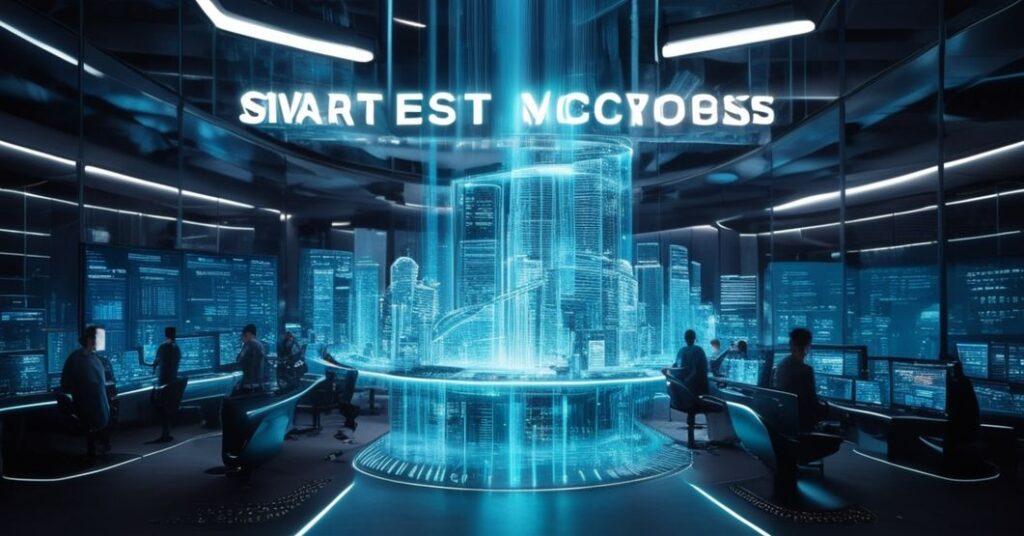

Smart Ecosystems: Weaving IoT and AI for Intelligent Urban Living
Our cities are complex, living entities, constantly evolving and facing myriad challenges, from traffic congestion and pollution to resource management and public safety. For decades, urban planners have sought ways to make cities more efficient, sustainable, and livable. Today, two transformative technologies, the Internet of Things (IoT) and Artificial Intelligence (AI), are converging to create what we call ‘Smart Ecosystems,’ promising a future where urban environments are not just connected, but truly intelligent.
This article delves into how IoT provides the sensory network for our cities, while AI acts as the brain, processing vast amounts of data to enable proactive decision-making and foster truly intelligent urban living.
The Foundation: Internet of Things (IoT)
At its core, the Internet of Things is a network of interconnected physical objects—’things’—embedded with sensors, software, and other technologies for the purpose of connecting and exchanging data with other devices and systems over the internet. In an urban context, these ‘things’ manifest as an extensive array of devices:
- Environmental Sensors: Monitoring air quality, noise levels, temperature, and humidity.
- Traffic Sensors: Detecting vehicle presence, speed, and flow to manage congestion.
- Smart Streetlights: Adjusting illumination based on ambient light and pedestrian/vehicle presence, saving energy.
- Waste Bins: Reporting their fill levels to optimize collection routes.
- Water Meters: Providing real-time consumption data to detect leaks and manage resources efficiently.
- Public Transportation Sensors: Tracking bus and train locations, passenger counts, and schedule adherence.
IoT devices act as the eyes and ears of a smart city, continuously collecting granular data from every corner of the urban landscape. This deluge of data, however, is merely raw information without a mechanism to interpret, analyze, and act upon it effectively. This is where Artificial Intelligence steps in.
The Brain: Artificial Intelligence (AI) and Machine Learning (ML)
If IoT provides the sensory input, AI and its subset, Machine Learning (ML), provide the intelligence to make sense of it all. AI algorithms are designed to process the massive streams of data generated by IoT devices, identify patterns, make predictions, and even automate responses without human intervention. This transformation from raw data to actionable insights is crucial for true urban intelligence.
Here’s how AI empowers IoT data:
- Pattern Recognition: AI can detect subtle anomalies in energy consumption patterns or traffic flows that indicate a problem or an emerging trend.
- Predictive Analytics: By analyzing historical and real-time data, AI can predict future events, such as traffic bottlenecks, potential infrastructure failures, or surges in public transport demand.
- Automated Decision-Making: Based on predictions and real-time conditions, AI systems can automatically adjust traffic signals, dim streetlights, or reroute public transport.
- Optimization: Machine learning algorithms can continuously optimize resource allocation, maintenance schedules, and service delivery for maximum efficiency and reduced costs.
This cognitive layer transforms a collection of connected devices into a cohesive, responsive, and adaptive urban ecosystem.
The Synergy: IoT + AI in Action
When IoT and AI work in concert, the possibilities for intelligent urban management are vast and impactful. Let’s explore some key applications:
Smart Traffic Management
IoT sensors collect data on vehicle density, speed, pedestrian movement, and even parking availability. AI algorithms process this data in real-time to dynamically adjust traffic light timings, suggest optimal routes to drivers, and guide them to available parking spots. This significantly reduces congestion, travel times, and emissions, enhancing urban mobility.
Environmental Monitoring and Management
A network of IoT sensors deployed across a city can monitor air quality (particulate matter, CO2, NOx), water quality, and noise pollution. AI analyzes these readings to identify pollution hotspots, predict future air quality based on weather patterns, and even trace the source of pollutants. This allows authorities to implement targeted interventions and alert citizens.
Public Safety & Surveillance
Connected cameras and acoustic sensors can be enhanced with AI-powered computer vision and audio analytics to detect unusual activities, identify potential threats, or locate individuals in distress. While raising privacy concerns, these systems can significantly improve emergency response times and deter criminal activity when implemented responsibly with strict ethical guidelines.
Smart Utilities & Infrastructure
IoT sensors embedded in water pipes, electricity grids, and waste management systems provide continuous data streams. AI analyzes this data for predictive maintenance, anticipating equipment failures before they occur, optimizing energy distribution, detecting water leaks, and streamlining waste collection routes. This leads to substantial savings, reduced resource waste, and more reliable service delivery.
Personalized Urban Services
From personalized recommendations for public transport routes based on real-time delays to adaptive street lighting that brightens as a pedestrian approaches, IoT and AI can tailor urban services to individual needs, improving convenience and accessibility for residents.
Overcoming Challenges & Future Outlook
While the promise of smart ecosystems is immense, their implementation comes with significant challenges:
- Data Privacy & Security: The collection of vast amounts of personal and public data raises critical concerns about privacy breaches and cyberattacks. Robust security protocols and transparent data governance are paramount.
- Interoperability & Standards: Different IoT devices and platforms often use proprietary technologies, making seamless integration a complex task. Standardized protocols are essential for a truly unified smart city infrastructure.
- Scalability & Infrastructure: Deploying and maintaining millions of sensors and the necessary communication infrastructure (e.g., 5G networks) requires substantial investment and careful planning.
- Ethical Considerations: The use of AI in surveillance, predictive policing, and automated decision-making necessitates careful ethical frameworks to prevent bias, discrimination, and misuse of power.
- Public Acceptance: Gaining trust and buy-in from citizens requires clear communication about the benefits, risks, and privacy safeguards of smart city initiatives.
The future of smart ecosystems looks bright, with continued advancements in edge AI, 5G connectivity, and autonomous systems further empowering urban intelligence. We will see more integrated platforms, citizen-centric design, and proactive governance models. The journey towards fully intelligent urban living is an ongoing process of innovation, collaboration, and ethical reflection.
Conclusion
The convergence of IoT and AI is not just an incremental improvement; it represents a fundamental paradigm shift in how we design, manage, and experience our cities. By transforming raw data into actionable intelligence, these technologies empower urban planners and citizens alike to build more efficient, sustainable, and enjoyable environments. As we navigate the complexities and embrace the opportunities, smart ecosystems hold the key to unlocking a future where technology truly serves humanity in creating intelligent urban living spaces.