
Industrial IoT: Connecting the Physical World for Operational Excellence
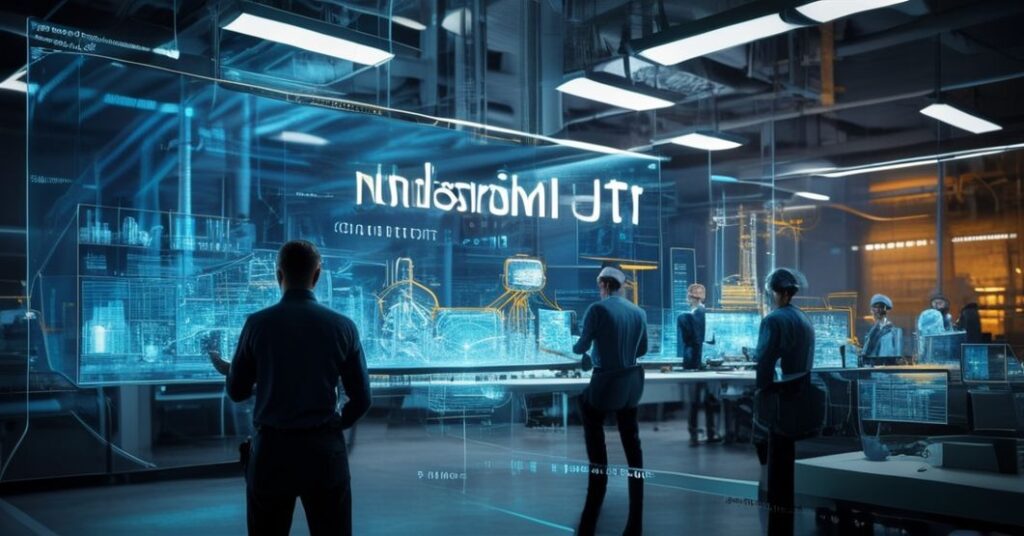
The Internet of Things (IoT) has permeated our daily lives, from smart homes to wearable tech. Yet, beyond the consumer realm lies a more profound and transformative application: the Industrial Internet of Things (IIoT). IIoT represents the convergence of operational technology (OT) with information technology (IT), leveraging a network of interconnected sensors, instruments, and other devices coupled with advanced analytics to enhance industrial processes. It’s about bringing unprecedented levels of visibility, control, and automation to manufacturing floors, energy grids, supply chains, and virtually every sector of heavy industry.
Unlike its consumer counterpart, IIoT focuses on improving efficiency, productivity, asset performance, and safety in industrial settings. It’s not just about convenience; it’s about significant cost reductions, minimized downtime, and creating new revenue streams through data-driven insights. In an increasingly competitive global landscape, IIoT is becoming a non-negotiable component of digital transformation strategies for businesses aiming for operational excellence.
Key Components of an IIoT Ecosystem
A robust IIoT ecosystem is a complex tapestry woven from several critical layers, each playing a vital role in data acquisition, transmission, processing, and actionable intelligence generation.
- Sensors & Smart Devices: These are the eyes and ears of the IIoT. From simple temperature and pressure sensors to sophisticated vision systems, accelerometers, and flow meters, these devices collect real-time data from machines, equipment, and the environment. Smart devices often include microcontrollers for local data processing, reducing the load on the network.
- Connectivity & Edge Infrastructure: Once data is collected, it needs to be transmitted. IIoT leverages a diverse array of communication protocols and networks, including wired (Ethernet, fiber optics) and wireless (Wi-Fi, Bluetooth, LoRaWAN, NB-IoT, and increasingly, 5G for its low latency and high bandwidth). Edge computing plays a crucial role here, allowing data to be processed closer to the source, reducing latency and bandwidth usage while enabling faster decision-making.
- IIoT Platforms: These cloud-based or on-premises platforms serve as the central nervous system. They are responsible for ingesting, storing, and managing vast quantities of data from disparate devices. IIoT platforms provide tools for device management, data normalization, security, and application enablement, often offering APIs for integration with existing enterprise systems like ERP or MES.
- Data Analytics & Artificial Intelligence (AI): Raw data has limited value; it’s the insights derived from it that drive operational improvements. Advanced analytics, machine learning (ML), and AI algorithms are applied to the collected data to identify patterns, predict failures, optimize processes, and detect anomalies. This includes predictive maintenance, quality control, process optimization, and energy management.
- Actuators & Control Systems: Closing the loop, actuators are devices that take action based on the insights generated. These could be robotic arms, valves, motors, or other mechanical components that execute commands to adjust processes, avert failures, or optimize performance. Programmable Logic Controllers (PLCs) and Distributed Control Systems (DCS) integrate IIoT insights directly into operational control.
Transformative Applications and Use Cases Across Industries
The power of IIoT lies in its ability to address specific industrial challenges, leading to measurable improvements across a multitude of sectors.
- Manufacturing:
- Predictive Maintenance: By continuously monitoring machine health, IIoT systems can predict equipment failures before they occur, enabling proactive maintenance, reducing costly unplanned downtime, and extending asset lifespans.
- Quality Control & Anomaly Detection: Sensors embedded in production lines monitor product quality in real-time, identifying defects early and reducing waste. AI can detect subtle anomalies that human inspectors might miss.
- Asset Tracking & Management: RFID and GPS technologies, combined with IIoT platforms, provide real-time visibility into the location and status of assets, tools, and inventory within a facility or across a supply chain.
- Energy Management: Monitoring energy consumption of individual machines or entire plants helps identify inefficiencies and optimize usage.
- Energy & Utilities:
- Smart Grids: IIoT enables real-time monitoring and control of energy distribution, optimizing supply and demand, detecting outages faster, and integrating renewable energy sources more efficiently.
- Remote Asset Monitoring: Monitoring the performance and health of remote infrastructure like pipelines, wind turbines, and solar farms, reducing the need for costly manual inspections.
- Logistics & Supply Chain:
- Real-time Tracking & Visibility: Sensors on shipments and vehicles provide real-time location, temperature, and humidity data, ensuring the integrity of goods and optimizing delivery routes.
- Warehouse Automation: Smart sensors and robotics streamline inventory management, order fulfillment, and space utilization within warehouses.
- Agriculture:
- Precision Farming: IIoT sensors monitor soil moisture, nutrient levels, and crop health, enabling farmers to optimize irrigation, fertilization, and pest control, leading to higher yields and reduced resource consumption.
Challenges and Critical Considerations
While the benefits of IIoT are compelling, implementing these systems is not without its hurdles. Organizations must address several key challenges to ensure a successful deployment.
- Cybersecurity: Connecting operational technology to the internet introduces significant security risks. IIoT devices can be vulnerable entry points for cyberattacks, potentially leading to operational disruption, data theft, or even physical damage. Robust security measures, including end-to-end encryption, access control, and continuous threat monitoring, are paramount.
- Scalability & Data Management: IIoT deployments can generate an unprecedented volume, velocity, and variety of data. Managing, storing, processing, and analyzing this “big data” requires scalable infrastructure, advanced data governance strategies, and powerful analytical tools.
- Interoperability & Integration: Industrial environments often consist of legacy systems and equipment from various vendors, utilizing proprietary protocols. Ensuring seamless communication and data exchange between diverse IIoT devices, platforms, and existing IT/OT systems is a major challenge.
- Return on Investment (ROI) & Implementation Costs: The initial investment in IIoT hardware, software, and integration can be substantial. Organizations need to clearly define use cases, establish measurable KPIs, and build a strong business case to demonstrate tangible ROI.
- Skills Gap: Implementing and managing IIoT solutions requires a blend of IT, OT, and data science skills, which can be scarce. Training existing staff or acquiring new talent is crucial.
The Future of IIoT: Hyper-Connected and Intelligent Operations
The trajectory of IIoT is towards even greater intelligence, autonomy, and integration. Several trends are shaping its evolution:
- Further Integration of Edge AI: More AI processing will move to the edge, enabling real-time decision-making without constant cloud communication, critical for applications requiring ultra-low latency and high reliability.
- Digital Twins: The creation of virtual replicas of physical assets, processes, or systems, powered by IIoT data, will allow for advanced simulation, predictive modeling, and optimization without impacting real-world operations.
- Enhanced Human-Machine Collaboration: Augmented Reality (AR) and Virtual Reality (VR) will increasingly integrate with IIoT data, providing technicians with real-time contextual information and guided maintenance procedures.
- 5G and Advanced Connectivity: The widespread deployment of 5G will unlock new possibilities for massive IoT deployments, ultra-reliable low-latency communication (URLLC), and enhanced mobile broadband (eMBB) in industrial settings.
- Cyber-Physical Systems (CPS): IIoT is a key enabler of CPS, where physical and computational components are deeply integrated, operating on different spatial and temporal scales, and interacting in ways that are dynamically changing. This forms the backbone of Industry 4.0.
In conclusion, the Industrial Internet of Things is far more than just connecting devices; it’s a fundamental paradigm shift in how industries operate. By transforming raw operational data into actionable intelligence, IIoT empowers businesses to achieve unprecedented levels of efficiency, agility, and innovation. Overcoming the inherent challenges will require strategic planning, robust cybersecurity, and a commitment to continuous learning, but the rewards—a future of hyper-connected, intelligent, and optimized industrial operations—are well within reach.