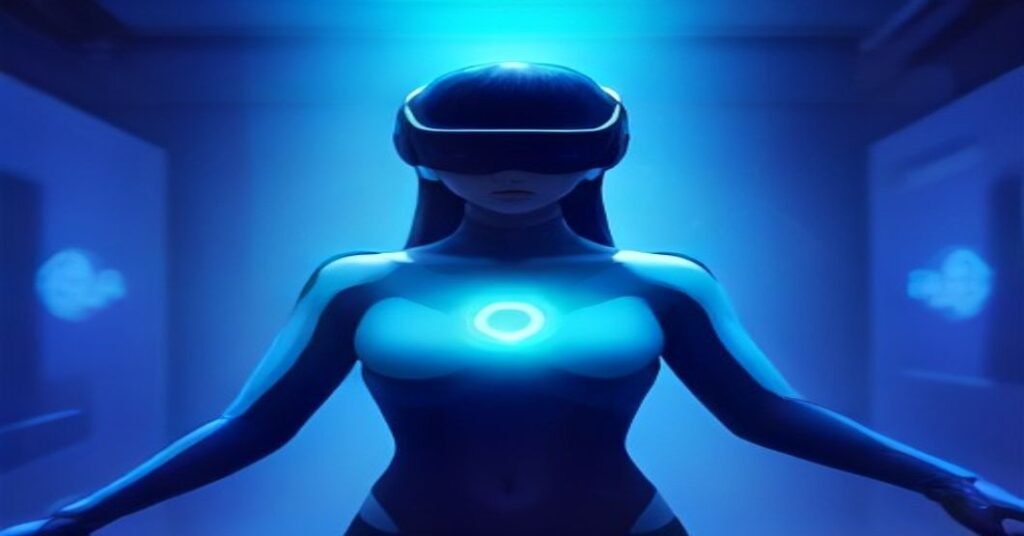

Immersive Futures: Exploring the Transformative Power of AR and VR
For decades, the concepts of augmented and virtual realities were confined to the realm of science fiction. Today, these powerful technologies are rapidly transitioning from speculative fantasy to practical tools, fundamentally reshaping industries, redefining human-computer interaction, and opening new frontiers in experience design. Augmented Reality (AR) and Virtual Reality (VR), often grouped under the umbrella term Extended Reality (XR), are no longer just about gaming; they are about transforming how we learn, work, heal, and connect with the world around us.
Augmented Reality: Blending Digital with Our World
Augmented Reality overlays digital information onto the real world, enhancing our perception without completely isolating us from our physical surroundings. Think of it as adding a digital layer to reality, visible through a smartphone, tablet, or specialized AR glasses.
How AR Works
- SLAM (Simultaneous Localization and Mapping): This core technology allows AR devices to understand their position and orientation in the real world, mapping surfaces and objects in real-time.
- Computer Vision: Enables the device to recognize objects, faces, and environments, allowing digital content to interact realistically with the physical world.
- Sensors: Cameras, accelerometers, gyroscopes, and depth sensors capture environmental data and user movement.
- Display Overlay: The digital content is rendered and superimposed onto the live view of the physical world, often through transparent displays or projection.
AR in Action: Real-World Applications
AR’s ability to provide contextual, real-time information makes it incredibly versatile:
- Industry & Logistics: Technicians can receive step-by-step repair instructions overlaid on complex machinery, reducing errors and training time. Warehouse workers use AR to quickly locate items and optimize picking routes.
- Retail & Marketing: Customers can virtually "try on" clothes, visualize furniture in their homes before purchase, or interact with immersive product demonstrations, enhancing the shopping experience.
- Healthcare: Surgeons can view patient data and 3D organ models directly overlaid on the body during operations. Medical students can practice complex procedures with realistic simulations.
- Education & Training: Interactive textbooks come to life with 3D models and animations. Students can explore historical sites or anatomical structures as if they were physically present.
- Navigation: AR navigation apps provide directions overlaid on live camera feeds, making it easier to find your way in unfamiliar environments.
Virtual Reality: Stepping into New Realities
Virtual Reality, in contrast to AR, offers a completely immersive, simulated experience, transporting users to entirely digital environments. Users are typically isolated from the real world, allowing for a profound sense of presence within the virtual space.
How VR Works
- Head-Mounted Displays (HMDs): These devices, like the Meta Quest or HTC Vive, feature high-resolution screens and optics that block out the real world, creating a wide field of view for the virtual environment.
- Tracking Systems: Internal or external sensors precisely track head and body movements, allowing users to navigate and interact naturally within the virtual space.
- Haptic Feedback: Gloves or controllers can provide tactile sensations, simulating the feeling of touching virtual objects, adding another layer of immersion.
- 3D Audio: Spatialized sound creates a realistic soundscape, enhancing the feeling of presence and directionality within the virtual world.
VR in Action: Transforming Experiences
VR’s capacity for total immersion makes it ideal for:
- Gaming & Entertainment: This is arguably the most recognized application, offering unparalleled levels of immersion in video games, interactive stories, and virtual concerts.
- Training & Simulation: Pilots, surgeons, soldiers, and factory workers can train in realistic, risk-free virtual environments, practicing complex scenarios and honing skills without real-world consequences or costs.
- Therapy & Wellness: VR is used to treat phobias (e.g., fear of heights or public speaking), manage pain, and provide mindfulness and relaxation exercises in calming virtual spaces.
- Design & Prototyping: Architects can walk through virtual buildings, automotive engineers can test vehicle designs, and product developers can iterate on prototypes in a 3D, interactive environment.
- Social & Collaboration: Virtual meeting spaces allow geographically dispersed teams to collaborate as if they were in the same room, fostering better communication and presence in remote work.
Bridging Realities: The AR/VR Spectrum
The distinction between AR and VR lies in their level of immersion and interaction with the physical world. While AR augments reality, VR replaces it. However, the lines are blurring with the emergence of Mixed Reality (MR), which allows digital and real-world objects to coexist and interact in real-time. Together, these technologies form Extended Reality (XR), an umbrella term encompassing AR, VR, and MR, signifying a continuous spectrum of immersive experiences.
Challenges and the Road Ahead
Despite their immense potential, AR and VR face significant hurdles:
- Technical Hurdles: Achieving photorealistic graphics with minimal latency, wider fields of view, comfortable and lightweight hardware, and long battery life remain key challenges. Powerful processing is required, often pushing the limits of mobile or standalone devices.
- Content Creation & Ecosystem: Developing compelling, high-quality AR/VR content is complex, expensive, and requires specialized skills. Building a robust ecosystem of development tools, platforms, and distribution channels is crucial for wider adoption.
- User Experience & Adoption: Issues like motion sickness (cybersickness), high hardware costs, and a steep learning curve can deter new users. Ensuring accessibility and comfort for diverse user groups is paramount.
- Ethical & Privacy Concerns: Extensive data collection from immersive experiences, the potential for digital addiction, and the psychological impact of spending significant time in virtual worlds raise important ethical and privacy questions that need careful consideration.
Towards Pervasive Spatial Computing
The future of AR and VR points towards a world of spatial computing, where digital information is seamlessly integrated into our physical environment. Imagine lightweight, stylish AR glasses that provide real-time information, act as personal assistants, and facilitate seamless communication. This vision will be powered by:
- Advanced AI: Enhancing context awareness, natural language processing, and realistic virtual assistants.
- 5G Connectivity: Enabling real-time streaming of rich virtual content and cloud-rendered experiences with ultra-low latency.
- Haptic and Neural Interfaces: More natural and intuitive ways to interact with digital content, potentially even directly through brain-computer interfaces.
As these technologies mature, AR and VR will move beyond niche applications into mainstream use, fundamentally altering our daily lives, work, and social interactions, making our future truly immersive.
Conclusion
Augmented Reality and Virtual Reality are more than just technological novelties; they are foundational shifts in how humans interact with digital information and each other. From revolutionizing training and design to transforming entertainment and healthcare, their impact is profound and far-reaching. While challenges remain, the rapid pace of innovation suggests that immersive technologies are not just a passing trend, but a vital component of our interconnected, digital future, promising a world where the lines between the physical and digital continue to blur in exciting, transformative ways.