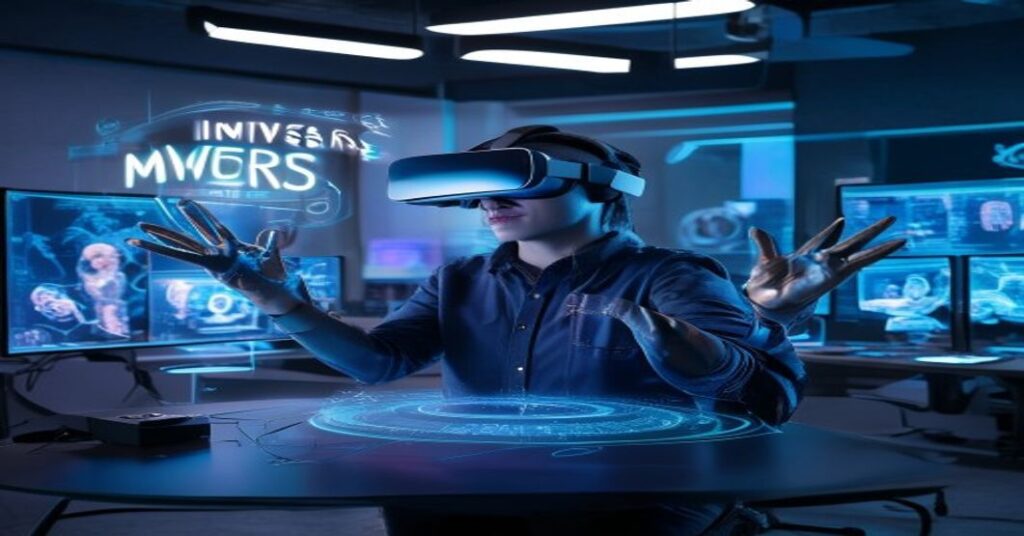

Crafting Immersive Worlds: A Developer’s Handbook to Augmented and Virtual Reality
The realms of Augmented Reality (AR) and Virtual Reality (VR), collectively known as Extended Reality (XR), are no longer confined to science fiction. They are rapidly transforming how we interact with digital content, perceive our surroundings, and even socialize. From gaming and entertainment to professional training, healthcare, and industrial design, AR and VR are opening up unprecedented possibilities. For developers, this represents a vast and exciting frontier, demanding a new set of skills and a fresh perspective on user experience.
Understanding the Spectrum: AR vs. VR
While often grouped, AR and VR offer fundamentally different experiences, each with its own development paradigms and use cases.
Augmented Reality (AR)
Augmented Reality overlays digital information onto the real world, enhancing our perception without fully immersing us in a simulated environment. Think of apps like Pokémon GO, Snapchat filters, or IKEA Place, which allow you to preview furniture in your home. AR experiences typically leverage smartphone cameras, smart glasses, or other transparent displays.
- Key Characteristics: Real-world context, digital overlay, interaction with physical environment.
- Use Cases: Retail (try-before-you-buy), education (interactive textbooks), industrial maintenance (on-site repair guides), navigation, gaming.
Virtual Reality (VR)
Virtual Reality, conversely, completely immerses users in a simulated digital environment, blocking out the physical world. This is achieved through VR headsets like Meta Quest, HTC Vive, or PlayStation VR. The goal is to create a profound sense of presence, making the user feel like they are truly *inside* the virtual world.
- Key Characteristics: Full immersion, simulated environment, often requires dedicated hardware.
- Use Cases: Gaming, realistic training simulations (medical, flight), virtual tourism, therapy (exposure therapy), architectural visualization, virtual meetings.
The Developer’s Toolkit: Platforms and SDKs
Building immersive experiences requires a robust set of tools. The choice of platform and SDK often depends on the target device, desired fidelity, and specific features needed.
Game Engines (The Powerhouses)
For complex 3D environments, physics, and advanced interactions, general-purpose game engines are often the go-to choice.
- Unity: A highly popular, cross-platform engine known for its ease of use, extensive asset store, and large community. It supports a vast array of AR/VR devices and is excellent for rapid prototyping and deployment across multiple platforms (mobile AR, PC VR, standalone VR). Its C# scripting environment is widely adopted.
- Unreal Engine: Renowned for its cutting-edge graphics capabilities, cinematic rendering, and powerful visual scripting system (Blueprints). Unreal is ideal for high-fidelity, photorealistic experiences, often found in high-end VR games and professional simulations. It uses C++ for core development.
Native AR Frameworks (Mobile-First)
For mobile AR experiences, platform-specific SDKs provide direct access to device hardware and optimized tracking capabilities.
- ARKit (iOS): Apple’s framework for creating AR experiences on iOS devices. It offers robust features like plane detection, world tracking, facial tracking, image recognition, and collaborative sessions.
- ARCore (Android): Google’s equivalent for Android devices, providing similar capabilities including motion tracking, environmental understanding, light estimation, and cloud anchors for persistent, shared AR experiences.
Web-Based XR (Accessibility & Reach)
WebXR aims to bring AR and VR to the web browser, making experiences more accessible without requiring app downloads.
- WebXR Device API: A standard API that allows web developers to create immersive experiences that run directly in compatible web browsers, supporting both AR and VR devices.
- A-Frame / Three.js: Popular JavaScript frameworks built on top of Three.js that simplify the creation of 3D and WebXR content, abstracting away much of the underlying WebGL complexity.
Core Concepts for Immersive Development
Beyond traditional software development, AR/VR introduces unique concepts crucial for success:
- Spatial Computing: Understanding and manipulating objects within a 3D coordinate system. This includes world tracking (position and orientation of the user/device), object tracking (recognizing and tracking specific physical objects), and plane detection (identifying flat surfaces in the real world).
- User Interaction: Input methods are diverse. VR often relies on handheld controllers with buttons and haptics, while AR might use touch gestures, gaze interaction, voice commands, or even hand tracking. Designing intuitive interaction models is paramount.
- Performance Optimization: Maintaining high, stable frame rates (typically 60-90 FPS for VR) is critical to prevent motion sickness and ensure a smooth experience. This involves efficient asset management, low-polygon models, optimized textures, batching, and clever rendering techniques.
- Sensory Feedback: Beyond visuals, audio design plays a massive role in immersion, often employing spatial audio. Haptic feedback (vibrations) can enhance the sense of touch and realism.
- User Experience (UX) Design: Designing for AR/VR requires considering comfort, cognitive load, and preventing simulator sickness. Intuitive user interfaces that feel natural in 3D space are essential.
Challenges and Best Practices
Developing for AR/VR comes with its own set of hurdles that developers must navigate:
- Performance and Optimization: Mobile AR devices and standalone VR headsets have limited computational power. Developers must constantly optimize models, textures, shaders, and scripts to maintain high frame rates. Techniques include occlusion culling, level of detail (LOD) systems, and efficient memory management.
- User Comfort and Ergonomics: Motion sickness is a real concern, especially in VR. Best practices include maintaining a consistent frame rate, minimizing sudden camera movements, offering comfort options (teleport locomotion), and ensuring content is not overly disorienting.
- Content Creation Pipeline: Creating high-quality 3D assets (models, textures, animations) is resource-intensive. Streamlining workflows between 3D artists and developers, using modular assets, and leveraging procedural generation tools can help.
- Accessibility: Designing immersive experiences to be accessible to users with various physical abilities, sensory impairments, and cognitive styles is crucial. This might involve customizable input methods, adjustable visual settings, and clear auditory cues.
- Ethical Considerations: As AR/VR becomes more integrated, developers must consider data privacy, potential for digital addiction, the impact on mental health, and the responsible use of spatial data and user biometrics.
The Future of Immersive Development
The trajectory of AR/VR development is exhilarating. We can anticipate:
- Advancements in Hardware: Lighter, more powerful headsets with wider fields of view, better resolution, and advanced tracking (eye-tracking, facial tracking, full-body tracking) are on the horizon. Haptic suits and advanced input devices will further bridge the physical and digital.
- AI Integration: AI will play an increasing role in content generation, intelligent virtual assistants within experiences, dynamic environment adaptation, and personalized user experiences.
- Metaverse Evolution: While the term is still evolving, the concept of interconnected, persistent virtual worlds will drive demand for scalable, interoperable AR/VR applications.
- Expansion into New Industries: Beyond gaming and training, expect deeper integration into fields like remote work, collaborative design, social networking, and even fundamental human interaction.
The immersive revolution is here, and developers are at its forefront. By understanding the core principles, mastering the tools, and embracing the unique challenges, you can contribute to crafting the next generation of digital experiences that will fundamentally change how we learn, work, play, and connect.