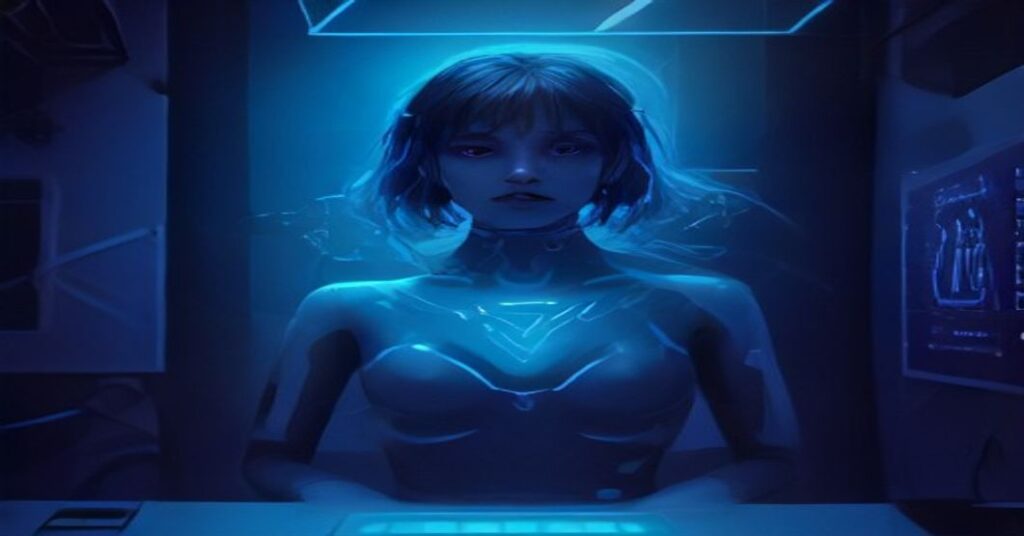

Generative AI: Unleashing Creative Potential and Transforming Industries
Artificial Intelligence has rapidly evolved beyond merely analyzing data or predicting outcomes. A new frontier, known as Generative AI, is now captivating the world, demonstrating the astounding ability to create entirely new, original content. From crafting compelling text and lifelike images to composing intricate music and designing novel molecules, generative models are pushing the boundaries of what machines can achieve, fundamentally reshaping industries and redefining creativity itself.
What is Generative AI?
At its core, Generative AI refers to a class of artificial intelligence models capable of producing novel data that resembles the data they were trained on, rather than simply classifying or predicting. Unlike discriminative AI, which learns to distinguish between different categories (e.g., is this a cat or a dog?), generative AI learns the underlying patterns and structures of input data to generate new instances that are statistically similar but not identical to anything seen before.
Key characteristics of Generative AI include:
- Novel Content Creation: It can produce original text, images, audio, video, code, and more, which didn’t exist in its training data.
- Learning from Data Patterns: It excels at understanding complex distributions and relationships within vast datasets.
- Versatility: A single generative model can often be adapted for various tasks, from style transfer to data augmentation.
Core Technologies Driving Generative AI
The prowess of Generative AI stems from several groundbreaking architectural innovations. Three of the most prominent include Generative Adversarial Networks (GANs), Variational Autoencoders (VAEs), and more recently, Transformer models and Diffusion Models.
Generative Adversarial Networks (GANs)
Introduced by Ian Goodfellow and colleagues in 2014, GANs operate on a fascinating ‘adversarial’ principle, pitting two neural networks against each other: a Generator and a Discriminator.
- The Generator‘s task is to create new data instances (e.g., images) that are indistinguishable from real data.
- The Discriminator‘s task is to distinguish between real data and the ‘fake’ data produced by the Generator.
This dynamic, competitive training process pushes both networks to improve continually. The Generator strives to fool the Discriminator, while the Discriminator strives to become an expert at detecting fakes. This interplay results in generators capable of producing incredibly realistic and diverse outputs. GANs have been particularly successful in generating photorealistic images, translating images from one domain to another (e.g., converting sketches to photos), and even creating deepfakes.
Variational Autoencoders (VAEs)
VAEs are another powerful class of generative models that learn a probabilistic mapping from input data to a latent (compressed) representation and then back again. Unlike standard autoencoders that simply learn to reconstruct their inputs, VAEs introduce a probabilistic twist, mapping inputs to a distribution over the latent space rather than a single point.
This allows VAEs to generate new data by sampling from this learned latent distribution and passing it through the decoder. VAEs are excellent for tasks like data compression, anomaly detection, and generating smooth interpolations between different data points, offering greater control over the generated content’s attributes compared to GANs in some contexts.
Transformers and Diffusion Models
The rise of the Transformer architecture, particularly with models like GPT-3, DALL-E, and BERT, has revolutionized natural language processing and extended its influence into other domains. Transformers excel at understanding context and relationships in sequential data, making them ideal for tasks like generating human-like text, translating languages, and even writing code. Large Language Models (LLMs) built on Transformers are at the forefront of text-based generative AI.
More recently, Diffusion Models have emerged as a leading technique for high-quality image and audio generation. These models learn to systematically destroy training data by adding noise and then reverse the process to construct new data from pure noise. This iterative refinement process allows them to generate incredibly detailed and diverse images that often surpass GANs in quality and diversity, as seen in models like Midjourney and Stable Diffusion.
Applications Across Industries
The practical applications of Generative AI are vast and growing, impacting nearly every sector:
- Content Creation: Automated generation of marketing copy, news articles, scripts, social media posts. Artists and designers use it to create unique images, concept art, and even entire virtual worlds. Musicians leverage AI to compose original pieces, variations, or background scores.
- Software Development: AI-powered assistants generate code snippets, suggest bug fixes, translate code between languages, and even write entire functions or tests, significantly boosting developer productivity.
- Drug Discovery & Material Science: Researchers are using generative models to design novel molecular structures with desired properties, accelerating the discovery of new drugs, vaccines, and advanced materials.
- Product Design & Engineering: Engineers can rapidly generate multiple design iterations for physical products, optimize existing designs, and explore innovative solutions for complex problems.
- Personalization: Generative AI can create highly personalized content, recommendations, and user experiences across e-commerce, entertainment, and education platforms.
Challenges and Ethical Considerations
While the potential of Generative AI is immense, it also introduces significant challenges and ethical dilemmas that demand careful consideration:
- Bias and Fairness: Generative models learn from the data they are fed. If this data contains biases (e.g., gender, racial, cultural), the AI will amplify and perpetuate these biases in its generated content, leading to unfair or discriminatory outputs.
- Misinformation and Deepfakes: The ability to create hyper-realistic images, videos, and audio raises serious concerns about the spread of misinformation, propaganda, and malicious deepfakes that can manipulate public opinion or harm individuals’ reputations.
- Copyright and Ownership: Who owns the content generated by AI? If an AI creates a piece of art or text, does the original creator of the model, the user who prompted it, or the AI itself hold the copyright? This is a complex legal and ethical grey area.
- Environmental Impact: Training large generative models requires immense computational power and energy, contributing to carbon emissions. The environmental footprint of these technologies is a growing concern.
- Job Displacement: As AI becomes more capable in creative and intellectual tasks, there are concerns about its potential impact on employment in industries traditionally relying on human creativity and expertise.
The Future of Generative AI
The field of Generative AI is evolving at an unprecedented pace. Future advancements are likely to focus on:
- Multi-modal Generation: Creating models that can generate content across multiple modalities simultaneously (e.g., a video with accompanying music and dialogue from a text prompt).
- Improved Controllability and Explainability: Giving users finer control over the attributes of generated content and making the AI’s creative process more transparent.
- Efficiency and Accessibility: Developing more computationally efficient models that are easier to train and deploy, democratizing access to these powerful tools.
- Ethical AI Development: Increased emphasis on developing robust frameworks, policies, and techniques to mitigate bias, detect deepfakes, and ensure responsible and ethical deployment of generative AI.
Generative AI represents a paradigm shift, transforming how we interact with technology and how we approach creation. While navigating its ethical complexities and societal impacts will be crucial, its potential to augment human creativity, automate routine tasks, and unlock entirely new forms of innovation promises an exciting and transformative future.