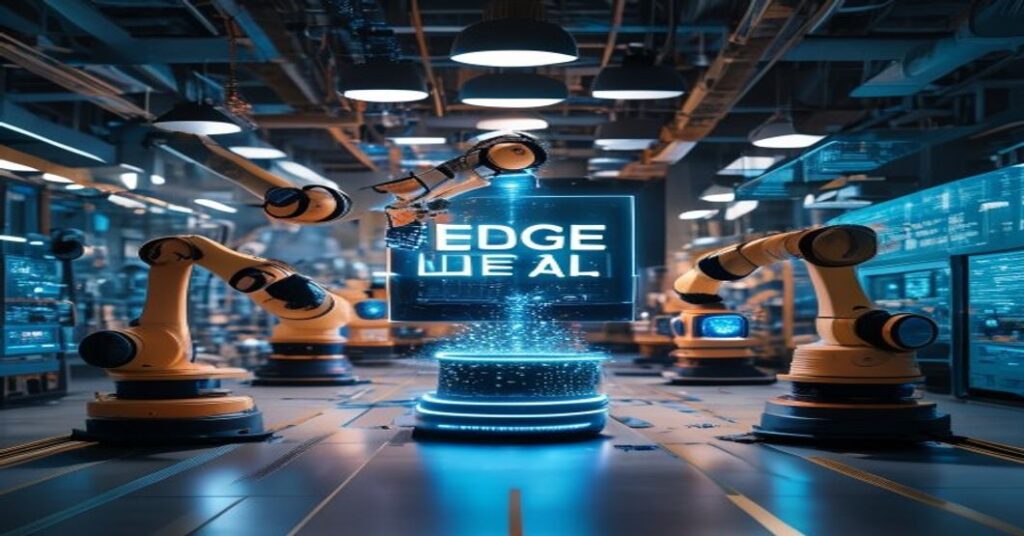

Edge AI: Revolutionizing IoT with Intelligent Local Processing
The Internet of Things (IoT) has transformed how we interact with our physical world, bringing billions of devices online, from smart home gadgets to industrial sensors. Traditionally, these devices collect vast amounts of data and transmit it to a centralized cloud infrastructure for processing, analysis, and decision-making. While effective, this cloud-centric model presents inherent challenges, particularly as the volume and velocity of IoT data continue to explode. Enter Edge AI – a paradigm shift that brings artificial intelligence directly to the source of data generation, fundamentally changing the landscape for IoT.
The “Cloud-First” Paradigm and Its Limitations for IoT
For years, the cloud has been the undisputed king of data processing. Its scalability, computational power, and storage capacity made it the natural home for IoT analytics. However, relying solely on the cloud for every decision introduces several critical bottlenecks:
- Latency: Sending data to the cloud and waiting for a response can introduce significant delays, which are unacceptable for time-sensitive applications like autonomous vehicles, industrial control systems, or critical medical monitoring.
- Bandwidth Constraints: The sheer volume of raw data generated by a multitude of IoT devices can overwhelm network bandwidth, leading to congestion, dropped packets, and increased operational costs.
- Privacy and Security Concerns: Transmitting sensitive data (e.g., patient health records, surveillance footage) to a remote cloud environment raises significant privacy and security risks, making compliance with regulations like GDPR or HIPAA more complex.
- Reliability: Cloud connectivity is not always guaranteed, especially in remote or unstable environments. A loss of internet connection can render cloud-dependent IoT systems inoperable.
- Cost: Continuously streaming large volumes of data to the cloud incurs substantial data transfer and storage costs, in addition to the compute costs for processing.
What is Edge AI?
Edge AI refers to the practice of deploying artificial intelligence and machine learning algorithms directly on edge devices – physical devices like sensors, cameras, robots, or local servers that are close to the data source, rather than sending all data to a centralized cloud or data center. Instead of merely collecting and transmitting data, these edge devices gain the ability to process, analyze, and even make decisions autonomously, in real-time.
Key characteristics of Edge AI include:
- Local Processing: Computation happens on the device itself or on a local gateway, minimizing reliance on constant cloud connectivity.
- Optimized AI Models: Machine learning models are typically compressed and optimized to run efficiently on resource-constrained hardware, often sacrificing a small amount of accuracy for significant gains in speed and power efficiency.
- Real-time Inference: The primary goal is to enable immediate insights and actions based on data as it’s generated, without the round-trip delay to a central server.
Why Edge AI for IoT? Key Benefits
Integrating Edge AI into IoT architectures unlocks a plethora of benefits that address the limitations of traditional cloud-centric models:
- Reduced Latency: By processing data locally, decisions can be made almost instantaneously. This is crucial for applications requiring immediate responses, such as collision avoidance in autonomous systems or anomaly detection in manufacturing.
- Bandwidth Efficiency: Only relevant insights or aggregated data need to be sent to the cloud, significantly reducing the amount of data transferred and easing network congestion. For instance, a smart camera might only send an alert when it detects a specific event, rather than streaming 24/7 video.
- Enhanced Security and Privacy: Sensitive data can be processed and analyzed locally without ever leaving the device or local network. This dramatically reduces the attack surface and helps meet stringent data privacy regulations, as raw data doesn’t need to traverse public networks.
- Improved Reliability: Edge AI devices can continue to operate and make intelligent decisions even if network connectivity to the cloud is intermittent or completely lost. This ensures continuous operation in critical applications.
- Cost-Effectiveness: Less data transferred means lower data transmission costs. Furthermore, offloading compute from the cloud to the edge can reduce cloud processing expenditures, leading to a more economical overall solution.
- Scalability: Distributing AI capabilities across numerous edge devices allows for more scalable deployments compared to funneling all data through a single central point. Each device adds its own processing power to the system.
Real-World Applications of Edge AI in IoT
The convergence of Edge AI and IoT is catalyzing innovation across numerous industries:
- Smart Cities: Edge AI can power intelligent traffic lights that adapt to real-time traffic flow, optimize waste collection routes based on sensor data, or enhance public safety through localized anomaly detection in surveillance feeds, all without constant cloud communication.
- Industrial IoT (IIoT): In factories, Edge AI enables predictive maintenance by analyzing sensor data from machinery to anticipate failures before they occur. It facilitates real-time quality control, detects anomalies in production lines, and optimizes robotic operations, leading to reduced downtime and increased efficiency.
- Healthcare: Wearable health monitors and remote patient monitoring devices can use Edge AI to detect critical events (e.g., falls, irregular heartbeats) and trigger immediate alerts, while processing sensitive patient data locally to ensure privacy.
- Retail: Edge AI can analyze in-store video feeds to understand customer behavior, manage inventory, detect shoplifting, or personalize shopping experiences, all without sending raw video data off-site.
- Autonomous Systems: Self-driving cars, drones, and robots rely heavily on Edge AI to process sensory data (cameras, LiDAR, radar) in milliseconds, enabling real-time navigation, obstacle detection, and decision-making crucial for safety and performance.
- Agriculture: Smart farming solutions use Edge AI on sensors and drones to monitor crop health, detect pests, and optimize irrigation at a granular level, improving yields and resource efficiency.
Challenges and Considerations
While the benefits are compelling, implementing Edge AI for IoT comes with its own set of challenges:
- Model Optimization and Compression: Complex AI models need to be optimized and compressed to run efficiently on resource-constrained edge hardware with limited CPU, memory, and power.
- Hardware Constraints: Designing and selecting appropriate edge hardware that balances computational power, energy efficiency, cost, and ruggedness for diverse environments is critical.
- Deployment and Management: Remotely deploying, updating, and managing AI models across potentially thousands or millions of geographically dispersed edge devices can be complex and requires robust DevOps practices.
- Data Governance and Orchestration: Deciding which data to process at the edge, which to send to the cloud, and how to synchronize insights between them requires careful architectural planning.
- Security at the Edge: Edge devices are often more vulnerable than centralized cloud servers. Securing these devices from physical tampering and cyberattacks, as well as protecting local data, is paramount.
- Limited Training Data: Training large AI models often requires vast datasets. While inference happens at the edge, the initial model training typically still occurs in the cloud or a data center.
The Future: Edge-Cloud Continuum
The future of IoT and AI is not a dichotomy between edge and cloud, but rather a seamless **edge-cloud continuum**. This hybrid approach leverages the strengths of both:
- Edge for Real-time Action: Immediate processing, local insights, and rapid responses.
- Cloud for Global Intelligence: Large-scale data aggregation, historical analysis, model retraining, and strategic decision-making.
In this continuum, edge devices provide the frontline intelligence, feeding curated, aggregated data and critical alerts to the cloud. The cloud, in turn, can refine AI models based on broader datasets and push updated, more intelligent models back down to the edge, creating a powerful feedback loop. This distributed intelligence architecture is poised to unlock the full potential of IoT, driving unprecedented levels of automation, efficiency, and insight.
Conclusion
Edge AI is not just an incremental improvement; it’s a foundational shift that empowers IoT devices with unprecedented levels of autonomy and intelligence. By decentralizing computation and bringing AI closer to the data source, we can overcome the traditional limitations of cloud-only architectures, paving the way for truly responsive, secure, and efficient smart environments. As hardware becomes more capable and AI models more efficient, Edge AI will continue to revolutionize industries, delivering real-time insights and actions that transform how we interact with the intelligent world around us.