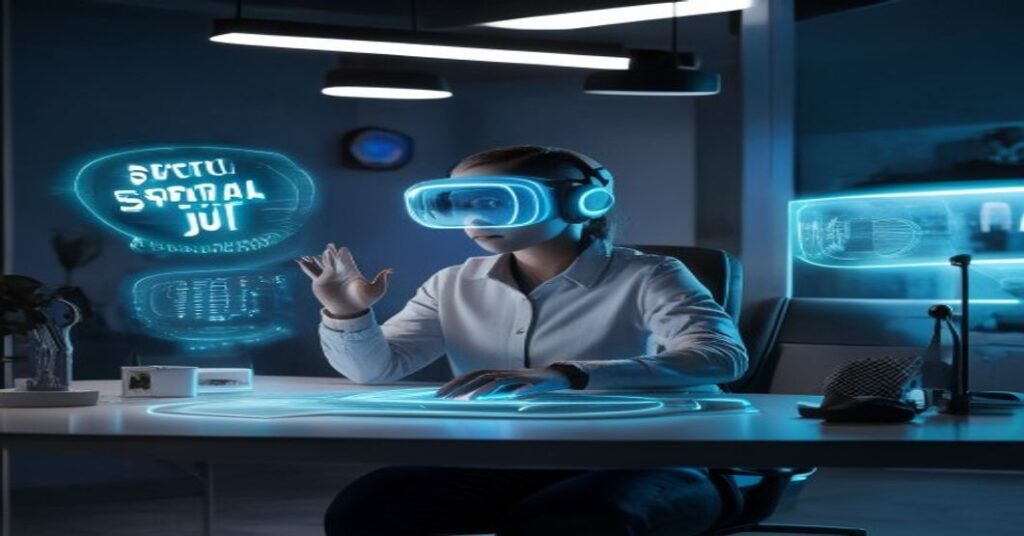

Developing for Spatial Computing: Building the Next Generation of Immersive Experiences
The digital landscape is rapidly evolving, moving beyond flat screens into three-dimensional, interactive environments. This shift, often termed Spatial Computing, represents a fundamental re-imagining of how humans interact with computers and digital content. It’s the underlying framework for concepts like Augmented Reality (AR), Virtual Reality (VR), Mixed Reality (MR), and the broader vision of the Metaverse. For developers, understanding and mastering spatial computing is no longer a niche skill but a vital pathway to building the next generation of truly immersive experiences.
What is Spatial Computing?
At its core, spatial computing involves software that understands and interacts with the real world in a three-dimensional sense. Instead of simply displaying information on a 2D screen, spatial computing applications integrate digital content into our physical environment or transport us into entirely virtual ones. This requires a system that can:
- Perceive the Environment: Using sensors (cameras, LiDAR, IMUs) to map and understand physical spaces.
- Track User Position and Orientation: Accurately knowing where the user is and how they are looking or moving within that space.
- Render 3D Content: Displaying digital objects that appear to exist or interact within the perceived physical or virtual space.
- Enable Natural Interaction: Allowing users to interact with digital content using gestures, gaze, voice, and physical movement, rather than just traditional input devices like mice or keyboards.
This paradigm shift promises more intuitive, engaging, and powerful ways to work, learn, play, and connect.
Understanding the Immersive Ecosystem: AR, VR, MR, and the Metaverse
While often used interchangeably, it’s crucial to differentiate between the various facets of immersive technology that fall under the spatial computing umbrella:
- Virtual Reality (VR): Fully immerses users in a simulated digital environment, typically blocking out the physical world. Devices like Meta Quest and Valve Index are prime examples.
- Augmented Reality (AR): Overlays digital information onto the real world, enhancing the user’s perception of their physical environment. This can be experienced through smartphone apps (e.g., Pokémon GO), smart glasses, or future AR contact lenses.
- Mixed Reality (MR): Blends physical and digital worlds, allowing for real-time interaction between real and virtual objects. Devices like Microsoft HoloLens and Magic Leap exemplify MR, offering a more interactive fusion than AR.
- The Metaverse: This is a broader, aspirational concept envisioning a persistent, shared, interconnected set of 3D virtual spaces where users can interact with each other, digital assets, and AI-driven entities in real-time. Spatial computing provides the foundational technologies for building and experiencing the Metaverse.
Core Technologies and Tools for Spatial Development
Building spatial experiences requires a distinct set of tools and platforms. Developers entering this field should become familiar with:
1. Game Engines and Development Frameworks
- Unity: The dominant engine for AR/VR development, known for its versatility, vast asset store, and strong community. It supports C# scripting.
- Unreal Engine: Favored for its high-fidelity graphics and visual scripting (Blueprints), ideal for photorealistic VR and complex simulations. It uses C++ primarily.
- OpenXR: An open standard for VR and AR application development, allowing developers to write once and deploy across multiple hardware platforms.
- ARKit (Apple) & ARCore (Google): SDKs for building AR experiences on iOS and Android mobile devices, respectively.
- WebXR: Enables immersive experiences directly within web browsers, making them more accessible without app installations.
2. Hardware and Platforms
- VR Headsets: Meta Quest series, Valve Index, PlayStation VR2, HTC Vive. Each has specific SDKs and performance considerations.
- AR/MR Devices: Microsoft HoloLens, Magic Leap, Apple Vision Pro. These devices often feature advanced sensors and unique interaction models.
- Mobile Devices: Modern smartphones are powerful AR platforms, leveraging their cameras and processors.
3. 3D Content Creation Tools
- Blender: A free and open-source 3D creation suite for modeling, sculpting, animation, and rendering.
- Maya / 3ds Max: Industry-standard professional 3D software from Autodesk.
- Substance Painter / Designer: Tools for creating detailed textures and materials for 3D models.
- Reality Composer / Adobe Aero: User-friendly tools for rapidly prototyping AR experiences without extensive coding.
4. Backend Services and Cloud Infrastructure
For persistent worlds, multiplayer functionality, asset management, and complex simulations, cloud services are indispensable. AWS, Azure, and Google Cloud offer scalable solutions for database management, real-time networking, content delivery networks (CDNs), and AI/ML services (e.g., for spatial recognition or NPC behavior).
Key Principles of Spatial UI/UX Design
Designing for spatial computing is fundamentally different from 2D screen design. User experience (UX) principles must account for the immersive, 3D nature of these environments:
- Natural Interaction: Prioritize intuitive interactions that mimic real-world behaviors (e.g., grabbing, pointing, walking). Avoid abstract UI elements where possible.
- Comfort and Ergonomics: Minimize motion sickness, eye strain, and cognitive load. Ensure smooth movements, stable frame rates, and clear visual cues.
- Contextual Awareness: Design UIs that are context-sensitive, appearing when needed and disappearing when not, without breaking immersion.
- User Presence and Agency: Enhance the feeling of ‘being there’ (presence) and give users clear control over their environment and interactions (agency).
- Spatial Sound: Utilize 3D audio cues to enhance immersion, direct attention, and provide feedback.
- Accessibility: Consider users with varying abilities, offering customizable comfort settings, alternative input methods, and clear visual/auditory feedback.
Building Your First Spatial Experience: A Practical Approach
Let’s outline a simplified development workflow for a spatial application:
- Define Your Vision and Platform: Start with a clear concept. What problem are you solving? What experience are you creating? Choose your target hardware (e.g., mobile AR, VR headset) and engine (Unity, Unreal).
- Set Up Your Development Environment: Install your chosen engine (Unity Hub or Unreal Engine Launcher), relevant SDKs (e.g., OpenXR plugin, AR Foundation for Unity), and any necessary IDEs (Visual Studio for C#, Rider).
- Design the Spatial Environment and Interactions: Sketch out your virtual world or AR overlay. Plan how users will navigate, interact with objects, and receive feedback. Focus on creating intuitive UI/UX flows.
- Create or Import 3D Assets: Develop your 3D models, textures, and animations using tools like Blender or Maya, or leverage asset stores (Unity Asset Store, Unreal Marketplace).
- Implement Core Logic and Interactions: Write scripts (C# in Unity, C++ or Blueprints in Unreal) to handle user input (gaze, gestures, controller input), object behaviors, physics, and application flow. For AR, integrate world tracking and plane detection.
- Optimize for Performance and Comfort: Spatial applications are resource-intensive. Optimize 3D models (polygon count, texture size), draw calls, physics simulations, and rendering settings to achieve smooth frame rates (e.g., 90+ FPS for VR) and prevent motion sickness. Implement techniques like culling and Level of Detail (LOD).
- Test, Iterate, and Deploy: Rigorously test your application on actual hardware with target users. Gather feedback, identify bugs, and iterate on your design and implementation. Prepare for deployment to relevant app stores (e.g., Meta Quest Store, Apple App Store, Google Play Store).
Challenges and Opportunities in Spatial Development
The field is nascent, presenting both significant hurdles and immense potential:
Challenges:
- Hardware Fragmentation: A multitude of devices with varying capabilities, input methods, and ecosystems.
- Performance Optimization: Achieving high-fidelity graphics at stable frame rates on often limited mobile or standalone hardware.
- Content Creation Pipeline: Producing high-quality 3D assets is resource-intensive and requires specialized skills.
- User Adoption and Comfort: Overcoming issues like motion sickness, high device costs, and the lack of compelling killer applications.
- Ethical and Privacy Concerns: Managing user data in highly personal and contextual environments, preventing addiction, and ensuring digital safety.
Opportunities:
- New Business Models: Digital economies, NFTs, virtual goods, and services within immersive worlds.
- Enhanced Collaboration and Communication: More natural and engaging remote work and social interactions.
- Transformative Education and Training: Immersive simulations for surgical training, engineering, and remote learning.
- Next-Generation Entertainment: Gaming, interactive storytelling, and live events unlike anything possible on 2D screens.
- Accessibility: Tools that augment reality for individuals with disabilities, or provide virtual environments where physical limitations are overcome.
The Future of Immersive Technologies
The trajectory of spatial computing points towards increasingly sophisticated and ubiquitous experiences. We can anticipate:
- Interoperable Metaverse: A future where digital assets and identities seamlessly transition between different virtual spaces.
- AI-Driven Content Generation: AI assisting in the creation of dynamic environments, characters, and storylines, lowering development barriers.
- Advanced Haptic Feedback: More realistic tactile sensations, enhancing the feeling of touch in virtual environments.
- Pervasive AR: Lightweight, stylish AR glasses becoming as common as smartphones, seamlessly blending digital information with daily life.
- Neurotechnology Integration: Brain-computer interfaces offering new forms of interaction and control.
Conclusion
Spatial computing is more than just a technological trend; it’s a new paradigm for human-computer interaction, offering unprecedented opportunities for innovation. For developers, diving into this field now means shaping the very foundations of how we will work, play, and connect in the future. While challenges abound, the rewards of creating truly immersive, impactful, and transformative experiences are immense. The journey beyond screens has begun, and the next generation of digital pioneers are those who embrace the spatial dimension.